Part 7: How to Unmake a Prince
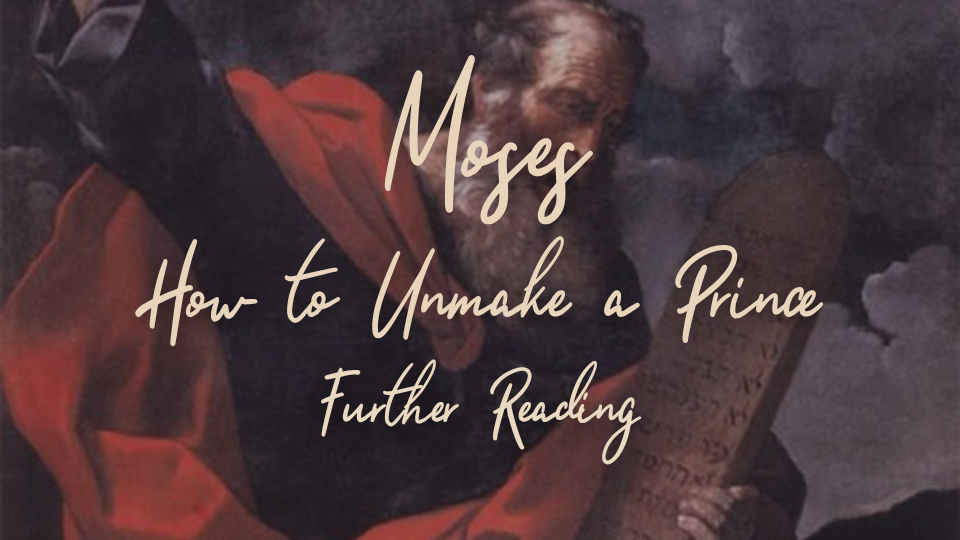
Part 7: Moses the Formed Resistor
Pairs with: Part 7 of the Egypt and the Bible Series from You've Heard It Said: Moses—Unmaking a Prince
This "further reading" is designed to make your Bible reading come alive. There are no set days or obligations to read consecutively, so engage at your own pace. Some installments will be longer than others depending on the theme. The hope is that these curated spotlight passages will illuminate Egypt through the biblical lens, helping the stories you thought we knew take on new depth and meaning.
Scripture:
- Exodus 2:11–15
- Exodus 3:1–14
- Exodus 14:10–14, 26–28
- Acts 7:22–29
- Hebrews 11:24–27
Cultural Note:
Acts 7:22 tells us Moses was educated in all the wisdom of the Egyptians, and that wasn't a small thing. Egyptian education was formational, not just informational. Literacy in hieroglyphics alone took years to master, and it was reserved almost exclusively for palace and temple scribes. To be educated in Egypt was to be shaped to uphold Ma'at. Discussed in full in Part 3, Ma'at was the cosmic order that Pharaoh maintained and everyone else served. Moses absorbed all of it: military strategy, administrative law, religious theology, the logic of top-down power.
Which is exactly why his first attempt at liberation failed. When he killed the Egyptian taskmaster and tried to intervene between two quarreling Hebrews, he was operating on Egyptian instincts—force, authority, and the assumption that the trained and credentialed person steps in and fixes things. The Hebrew man's response cut right through it: Who made you ruler and judge over us? Nobody had. Moses appointed himself, the way people formed by empire tend to do.
So God sent him to Midian. Forty years as a shepherd—the occupation Egyptians considered beneath contempt—among a people he'd never belonged to. In Hebrew literature, forty signals something complete and thoroughgoing rather than a precise figure. Something was being undone in Moses during those years. And when God finally showed up in a burning bush, the man who appeared was not the confident prince. He was reluctant, slow of speech, convinced he was the wrong choice. That reluctance, it turns out, was the point. God didn't need Moses' confidence. He needed Moses' obedience—and a man who'd been emptied of Egypt's power logic was finally able to offer it.
Reflection:
Where is God forming you in a hidden place. Perhaps through work that feels beneath you, through a season of quiet that feels like being forgotten? What parts of your own "Egyptian training"—the cultural assumptions about power, credentials, and who gets to lead—might God be asking you to unlearn? And what would it look like to trust God's methods instead of the ones you were shaped to reach for?
Further Reading:
The Midianites are worth a closer look. They're descendants of Abraham through Keturah (Genesis 25:1–4), which makes Jethro and Zipporah part of the broader Abrahamic family tree, and there's a genuinely fascinating thread about what Jethro's worship of YHWH might tell us about where Moses's theology came from. For the Moses formation arc more broadly, Walter Brueggemann's The Prophetic Imagination explores the idea of "dismantling imperial consciousness"—how God works against the grain of empire's logic—and is worth your time well beyond this series.
Conclusion
If you found this Further Reading Plan helpful, let me know in the comments on Substack or over on social media! I'd love to hear how you're engaging with Scripture through this historical and anthropological lens.
Next time:
Egypt built monuments meant to last forever. It didn't. But the story Israel carried out of Egypt, and that one survived empires, exile, and centuries of forgetting. In the final installment of the series, we're asking what it means that Egypt went from captor to refuge, why the prophets kept reaching for Egypt as a metaphor long after the Exodus, and how a land that once defined bondage became one of the earliest homes of the Christian faith.
That's Part 8: Egypt as Memory, Not Just History