Part 4: Households, Hierarchy, and the God Who Sees
Part 4: Households and Hierarchies
Pairs with: Part 4 of the Egypt and the Bible Series from You've Heard It Said: Households, Hierarchy, and Hidden Resistance
This "further reading" is designed to make your Bible reading come alive. There are no set days or obligations to read consecutively, so engage at your own pace. Some installments will be longer than others depending on the theme. The hope is that these curated spotlight passages will illuminate Egypt through the biblical lens, helping the stories you thought we knew take on new depth and meaning.
Scripture:
- Exodus 1:15-22– Shiphrah and Puah resist Pharaoh
- Exodus 2:1–10 – Jochebed and Miriam save Moses
- Genesis 16 – Hagar's story
- Genesis 21:8–21 – Hagar sent away
- Exodus 22:21 – "Do not mistreat or oppress a foreigner"
- Numbers 27:1–11 – Daughters of Zelophehad (optional: women advocating for justice)
Cultural Note:
Egypt's power wasn't just built on monuments and gods—it was built on hierarchy. Everything and everyone in their place. Pharaoh at the top, trained as a priest and controlling one-third of Egypt's land alongside the temple priesthood. Then came scribes (the literate class who controlled information), artisans, farmers, and finally slaves at the very bottom.
The Hebrews existed in the in-between spaces—shepherds in a culture that despised them. Useful for managing livestock, but culturally suspect because they were nomadic in a settled society. Genesis 46 records Joseph warning his brothers: "Every shepherd is an abomination to the Egyptians." When political winds shifted and a new pharaoh came to power who "knew not Joseph," the Hebrews were pushed to the bottom—forced into corvée labor, making bricks, building store cities.
But resistance came from unexpected places.
Shiphrah and Puah were midwives—low on the social hierarchy, beneath Pharaoh's notice. When Pharaoh commanded them to kill Hebrew baby boys during delivery, they quietly refused. They "feared God" more than Pharaoh and lied to protect the vulnerable. Their resistance wasn't loud or heroic by epic standards. It was small, strategic, subversive.
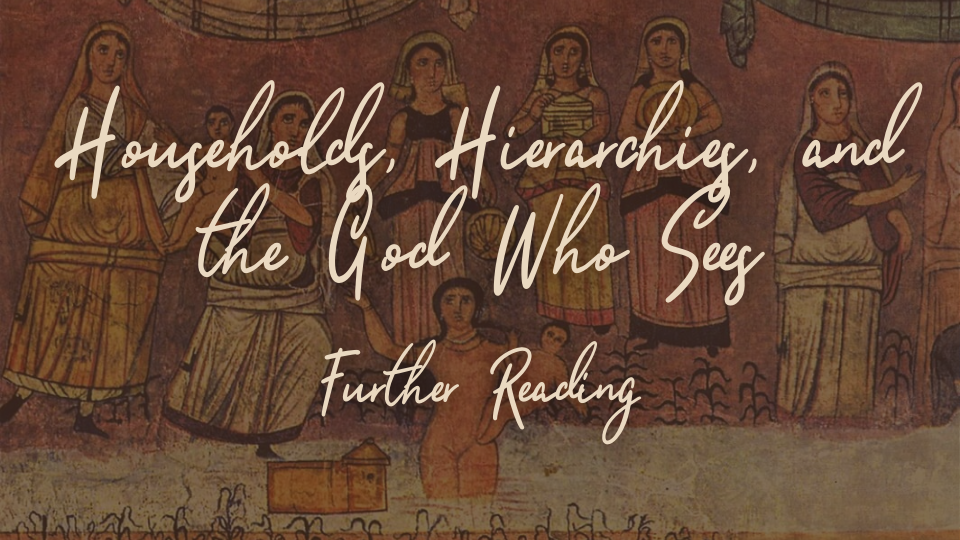
When Pharaoh escalated with a new decree—throw every Hebrew boy into the Nile—Jochebed, Moses' mother, turned the weapon against itself. She made a waterproof basket and placed her son in the river, just as Pharaoh commanded. But not to kill him—to save him. The Nile, which should have been his death, became his deliverance. His sister Miriam watched over him, and when Pharaoh's daughter found the baby, Miriam brought their own mother back to raise him. Three women—a mother, a sister, and an Egyptian princess—conspired to save one Hebrew baby.
And then there's Hagar. An Egyptian woman enslaved by Hebrews—by the very people who would later cry out to God because they were enslaved in Egypt. When Sarah couldn't conceive, she gave Hagar to Abraham as a secondary wife. Hagar had no choice. She was property. After bearing Ishmael, when Sarah finally had Isaac, Sarah cast Hagar out into the wilderness.
And God saw her.
Genesis 16:13 says Hagar called God "El Roi"—the God who sees me. She's the first person in Scripture to give God a name. Not Abraham. Not Sarah. Hagar, the Egyptian slave woman. God didn't side with the Hebrew matriarch. He sided with the vulnerable outsider.
This is the pattern throughout Scripture: God chooses the barren women, the youngest sons, the shepherds at Jesus' birth, the women as first resurrection witnesses. God doesn't work the way empires work. Empires consolidate power at the top. God scatters it to the margins.
And centuries later, when God gives the Law at Sinai, one of the commands is: "Do not mistreat or oppress a foreigner, for you were foreigners in Egypt" (Exodus 22:21). Remember what it felt like to be Hagar. Remember what it felt like to be the immigrant, the outsider, the one with no power. And don't do to others what was done to you.
Reflection:
On Hierarchy and Power: Where do you see rigid hierarchies in your world—systems that decide who matters and who's expendable? How does God call you to resist structures that dehumanize people?
On Quiet Resistance: Shiphrah and Puah didn't storm palaces. They just refused to participate in injustice. Where can you practice quiet, strategic resistance against unjust power? What small acts of defiance might preserve life?
On Seeing the Vulnerable: Who are the "Hagars" in your life—people you're tempted to overlook, use for your own purposes, or treat as expendable? How is God calling you to see them, honor them, protect them?
On Women's Agency: Notice how many women saved Moses: Shiphrah, Puah, Jochebed, Miriam, and even Pharaoh's daughter. God works through people empires decide don't matter. How does this challenge your assumptions about who God uses?
On Identity and Justice: The Hebrews oppressed an Egyptian (Hagar), then were later oppressed in Egypt. God's justice isn't tribal—it's universal. How does remembering your own vulnerability shape how you treat others?
Further Reading:
- Read the full story of Hagar (Genesis 16 and 21) and notice how God honors her even when Abraham's family doesn't
- Study the daughters of Zelophehad (Numbers 27) as an example of women advocating for justice and God changing the law in response
- Explore other "resistance from below" stories in Scripture: Rahab (Joshua 2), Esther, the Syrophoenician woman (Mark 7:24–30)
Prayer Prompt:
God who sees—El Roi—thank You for seeing me when others overlook me, and for calling me to see others the way You do. Help me resist systems that dehumanize. Give me courage like Shiphrah and Puah to quietly refuse injustice. Show me who the vulnerable are in my life—the Hagars I'm tempted to use or ignore—and teach me to honor them as You do. Remind me that You don't work through empires and hierarchies the way the world does. You scatter Your power to the margins. You choose the overlooked. You side with the vulnerable. Help me follow Your pattern. Amen.
Conclusion
If you found this Further Reading Plan helpful, let me know in the comments on Substack or over on social media! I'd love to hear how you're engaging with Scripture through this historical and anthropological lens.
Next time:
We’re going to talk about Joseph. The Hebrew who became Egyptian. The man who climbed to the very top of this hierarchy we’ve been discussing, who wore Egyptian clothes, married an Egyptian woman, and fully integrated into the “land of his affliction,” (Genesis 41:52)
Joseph saved Egypt. But what did Egypt cost him? And what did it cost his family?